Here’s an interesting story…
A man lost his memory.
I think he had Alzheimer’s.
When you asked him his address, he didn’t know.
But if he was outside in his neighborhood, he could always find his way home.
How was that possible?
CONSCIOUS VS UNCONSCIOUS LEARNING
Conscious learning is what you do in school.
You study a textbook.
If feels like work; it feels fast; it feels like progress.
You can answer questions, give definitions, translate and pass tests.
There are multiple problems, however:
You forget.
You forget fast.
You make mistakes.
It’s difficult to speak.
Then there’s unconscious learning.
It takes longer to learn; it doesn’t feel like you’re learning; and you can’t explain what you know.
But the advantages are:
You remember longer.
You make fewer mistakes.
You can speak.
That’s how the man was able to find his way home: he had memories of walking home which were stored in his unconscious memory.
And that’s how you’ll speak English correctly: you’ll make memories of correct English.
That’s level two on our pyramid:
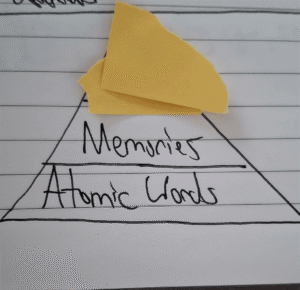
Now, how do you make memories?
Hi Ryan,i am a member of Vig Village and i wanted to take the CCM course but i am not able to do it.I told you last saturday in the weekky check Chatroom and i emailed dayly to Filip ,asking for solve the task..So i only guess the answer:mayby it is memorizing.I should be so happy and satisfied if you can fix the problem so i can join the course now.
Kind regards
Gisela
When I was a child and later on a student, I used to put my book or notebook under pillow to remember the text while sleeping. My peers did the same thing. This was the way we used to stick the knowledge in our unconscious memory.
😯🤔😉🤣
I guess one of the best ways to memorise a language , if you follow the behaviour pattern of native English, as a baby is growing up until starting school, plus you deal with the language day by day: reading, listening and speaking if possible with different native speakers.
Create memories. Yes. I think to its good if you are structure with everything you do. It will make it easier for you. I mean have structure in your mailbox ,create maps so you easily find what you are looking for. Repetition is essential to remember stuff.
I thought we was going to talk more about the pyramid,Create memories ….
Build memories with help of images and stories